Consulting Skills for Educational Technologists (ETEC 673), Winter 2022
This project was my course work in Consulting Skills for Educational Technologists class in winter 2022. In this course project, I have produced:
Airflow Airways Performance Consulting
- Cause Analysis
- Stakeholder Presentation
- Executive Summary
Brief Introduction of the Project
- Subject: Performance issues of the cleaning crews at Airflow Airways
- Client: Joe Wright, the Training Department Manager
- Background: Airflow Airways is experiencing increased flight delays and customer complaints caused by cleaning crews
- The Request: Developing a performance improvement campaign
Summary of Cause Analysis
- According to the interview with Joe Wright, the cleaning crews at the Airflow Airways cause 3% increase in flight delays.
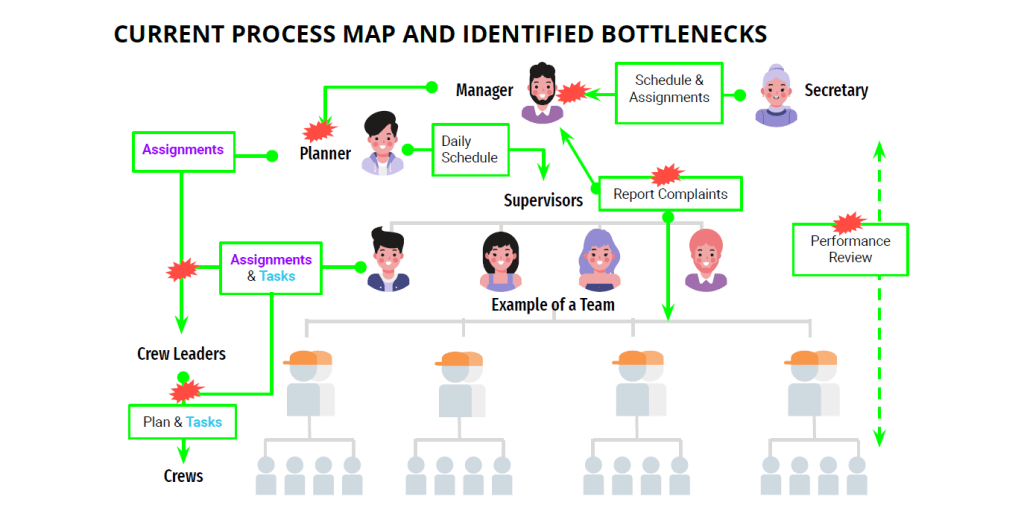
- Cause analysis identified the bottlenecks in the work process within the department.
- Lack of feedback prevented cleaning crews from improving their performance, and increased tasks without incentives demotivated them.
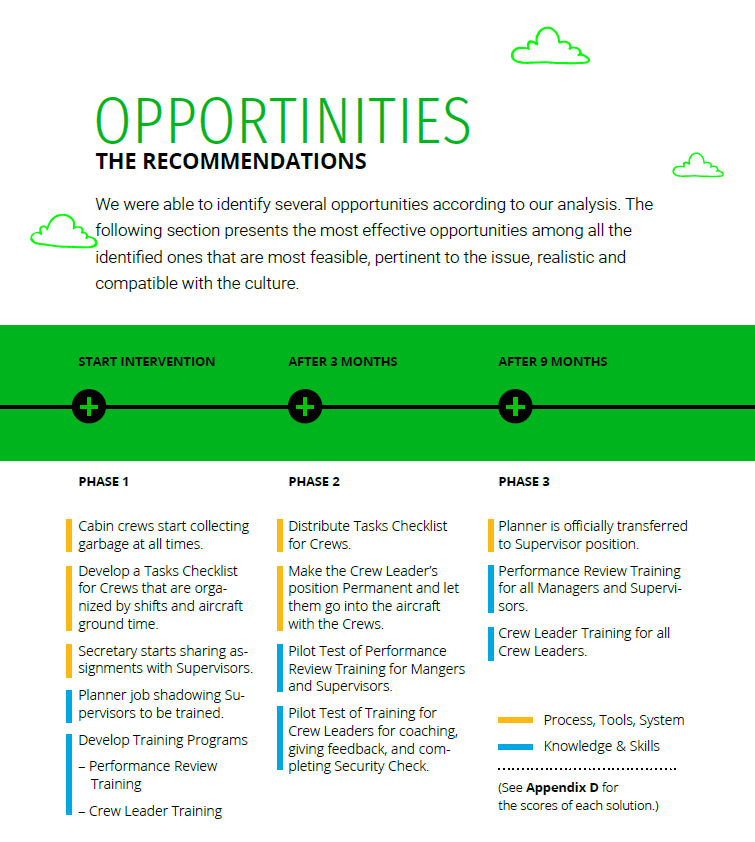
- Managers and supervisors lack the skills and knowledge on giving performance reviews.
- There was no adequate recognition/incentive for the role of Crew Leaders which is crucial in the work process.
Examples of Analysis
My reflection on the project
Working on this case study provided me with practical experience because we were given some realistic data. The simulation process also consisted of some key stages for us to practice. Starting with the client interview, we gathered information to understand the case and formulate further questions. Responses from the client (performed by the instructor) were also similar to the experience that I had with some of my clients – not always available, not always giving clear answers to the request. Working on the cause analysis as a team was an excellent peer learning experience. We all had different strengths and we were able to help each other to complete the tasks. Finally, having former students who took this class before us and currently working in the performance consulting field as our acting stakeholders also provided the class with the taste of real presentation experience.
The most interesting work on the project for me was the gap analysis using Gilbert’s Behavior Engineering Model. It taught me to look at every performance issue in the 360 degrees, without jumping to solutions immediately. I learned to look for the root causes instead of reacting to symptoms, while remaining solution agnostic. There are many models like BEM to help us find these root causes, however, without understanding the business goals first, it will be difficult to provide solutions that could improve the performance. Therefore, as many models suggest, we need to look at not only the workers and their work but also the organizational and societal goals and benefits. Understanding the several levels of goals involving individual performance, broadened my eyes to realize we can only treat issues successfully when we look at them with the environment instead of examining them in isolation. Working on this analysis was a great practice of systems thinking.
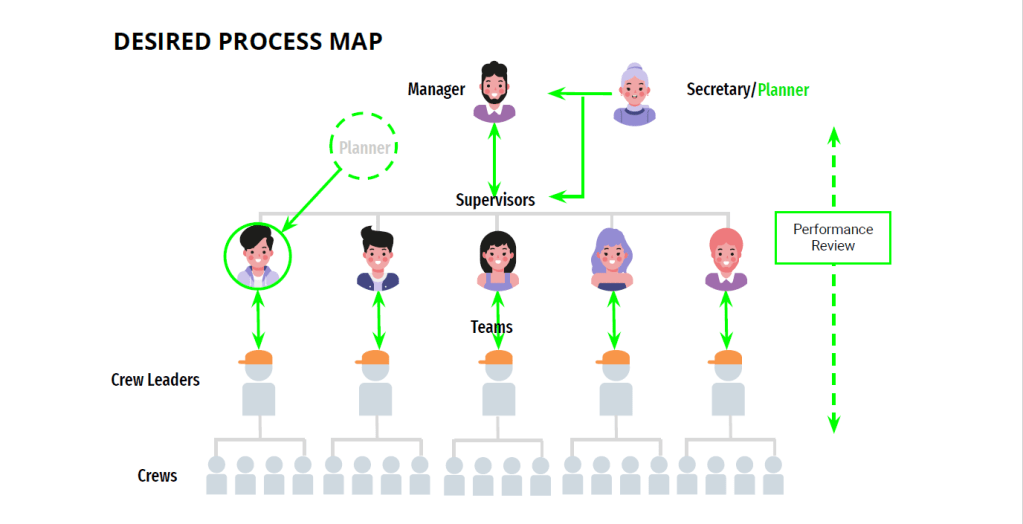
Finally, I learn to treat cases with the human in mind. Oftentimes, I thought consultants are experts that find solutions for given mandates. However, I learned that it is more successful when we partner with the client in analyzing the case and finding solutions. Secondly, while working on restructuring Airflow Airways, my workplace hired an external consultant who brought up a restructuring solution for the organization. I could have first-hand experience of what the employees go through when such change happens. This is why my ‘planner’ position is transferred to become a ‘supervisor’ instead of crossed out in my suggested solutions. It is important to find a solution that maximizes the benefit of the organization, however, ignoring the motivation and emotion of workers in the process could in fact cause losing the core employees. Therefore, I learned that it is crucial to find solutions that consider the pushback from the affected employees.
Key takeaways from this course:
- Appreciative Inquiry – asking the right questions!
- Reinvention – be aware of the Titanic Syndrome!
- Storytelling – the power of storytelling!
- Human-centered – the center of performance is a human!
 June Kim Design